This post is an answer to the ECG Case 340
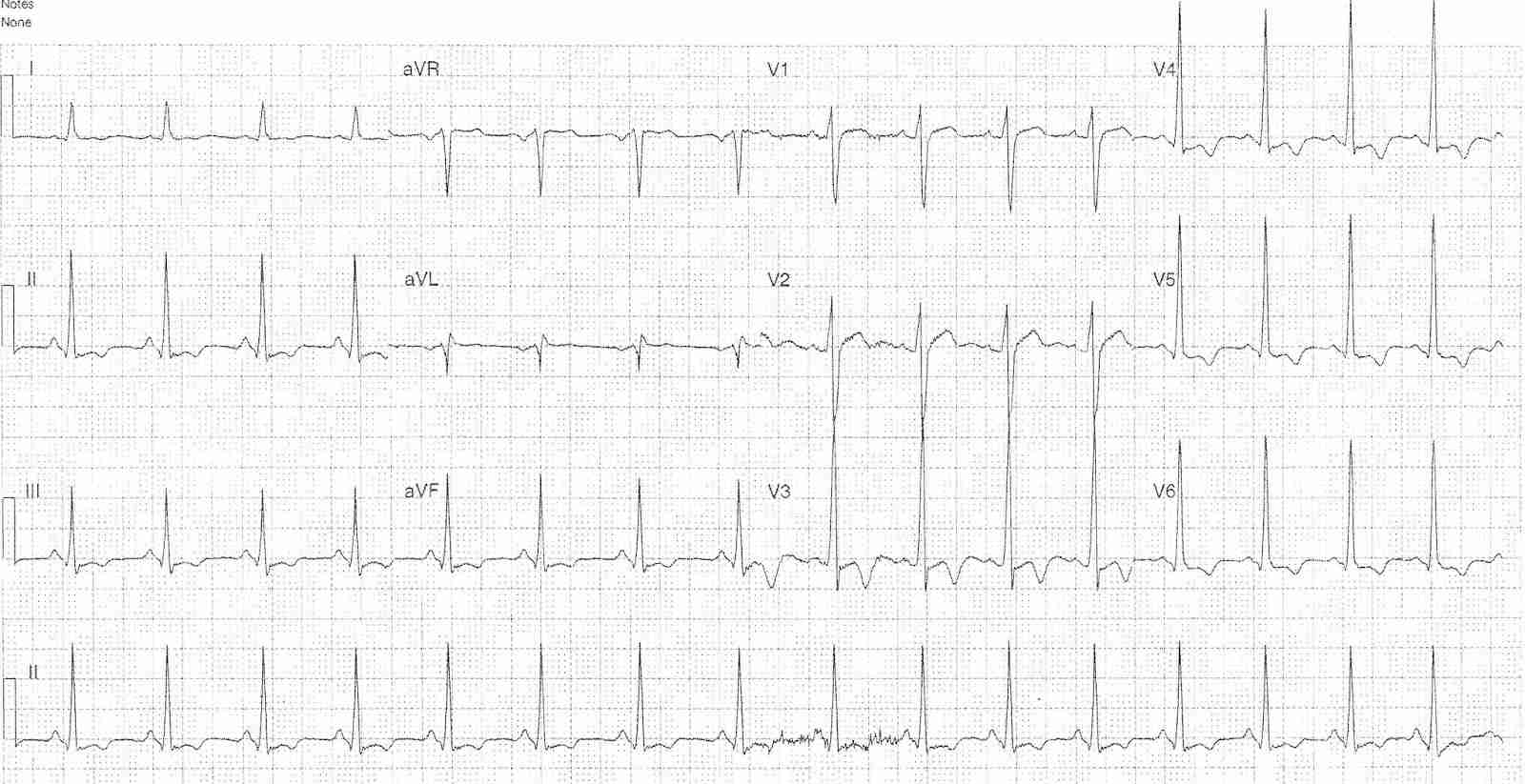
- Rate: 84 bpm
- Rhythm: regular sinus rhythm
- Axis: Normal
- Intervals:
- PR – Normal (~120ms)
- QRS – Normal (100ms)
- Additional:
- Voltage criteria for LVH
- R V2 + S V4 = 45mm
- LV ‘strain’ pattern
- ST depression in leads I, III, aVF, V3-6
- T wave inversion in leads I, III, aVF, V3-6
- No features of left atrial abnormality
- Voltage criteria for LVH
Interpretation
- ECG features of LVH with secondary ST/T wave changes
- Needs serial ECGs to monitor for dynamic ST or T wave changes
Note the patient is a young male and while voltage criteria for LVH can be seen in the athletic heart it should NOT be associated with left axis deviation, left atrial abnormality, pathological Q waves or ST / T wave changes, these are abnormal and require further investigation.
What happened next ?
On further history the patient admitted to prior anabolic steroid use, although he denied recent use. He had recently, within the last few days, started taking clenbuterol ( a potent sympathomimetic amine) to help with weight loss (aka ‘cutting’) prior to a competition.
Clenbuterol can be used to treat asthma in veterinary medicine but it is not approved for human use in Australia, US or UK and is banned for use by Olympic athletes. It potential side effects are those of sympathomimetic toxicity including tachycardia, hypertension, hyperthermia and seizure.
The patients initial troponin was 1.08 (ug/L cTnI) and he was admitted for investigation under the cardiology team. He underwent an angiogram which was normal and an echo which showed only mild concentric hypertrophy. The likely cause of his presentation and myocardial injury was attributed to vasospasm / demand ischaemia secondary to clenbuterol.
READ MORE: Left Ventricular Hypertrophy (LVH): How to Recognize it on ECG [With Examples]