This post is an answer to the Case – Mottled Skin Discoloration of the Lower Extremities
A 32-year-old woman with a long history of Raynaud’s phenomenon presented to the rheumatology clinic for assessment of severe fatigue and a mottled, purplish discolouration of the skin of her lower extremities. In 2014, she was diagnosed with chronic idiopathic dysautonomia, which leads to orthostatic hypotension and postural orthostatic tachycardia syndrome (POTS). Tilt-table testing resulted in a progressive drop in systolic blood pressure by 30–35 mm Hg and diastolic blood pressure by 15–20 mm Hg when tested at a tilt angle of 70 degrees for 18 min. During this test, she also developed progressive sinus tachycardia, with her heart rate increasing from 117 beats per min to 170 beats per min.
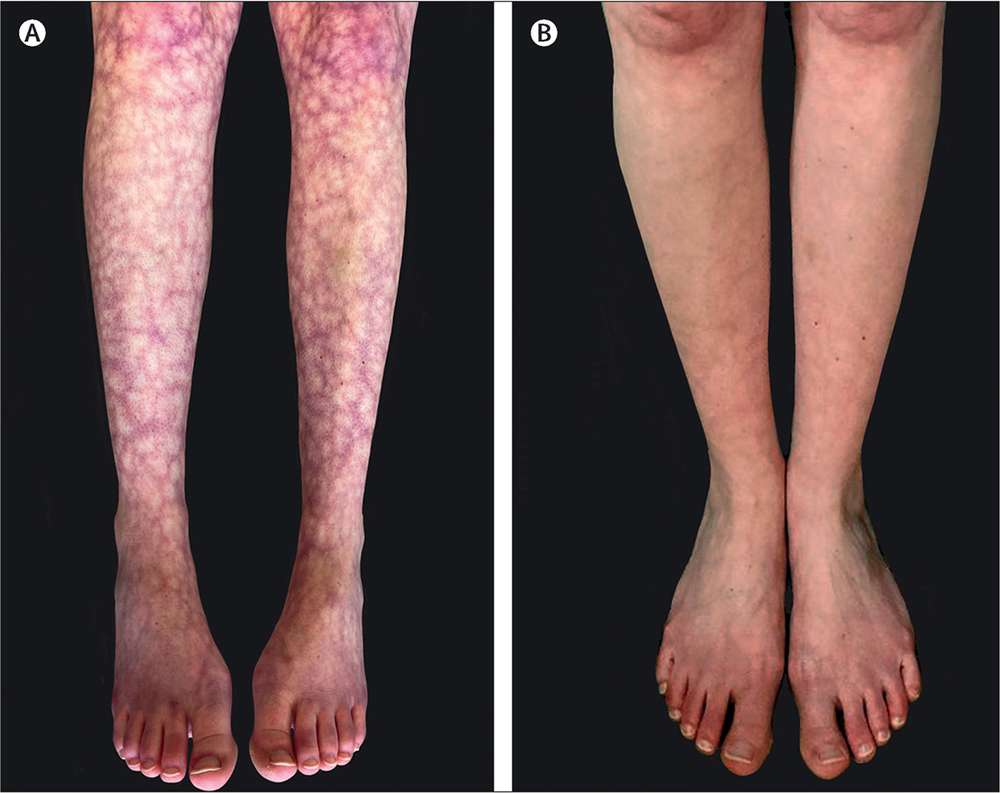
The appearance of the patient’s legs during assessment was suggestive of livedo reticularis (figure A). However, her legs did not show marked patterns of discolouration after waking up in the morning (figure B). The patient also noted that the mottled skin would go away if she were outside in warm weather or after a hot shower. Tests for lupus anticoagulant, cryoglobulins, and cold agglutinins were negative.
The patient was advised to increase her salt intake to 3–5 g/day for treatment of POTS and to use custom-made compression stockings; she also started treatment with pyridostigmine bromide (one 60 mg tablet four times daily) and ivabradine hydrochloride (half 5 mg tablet twice daily). However, her livedo reticularis persisted.