This post is an answer to the Case – Painful Unilateral Exophthalmos
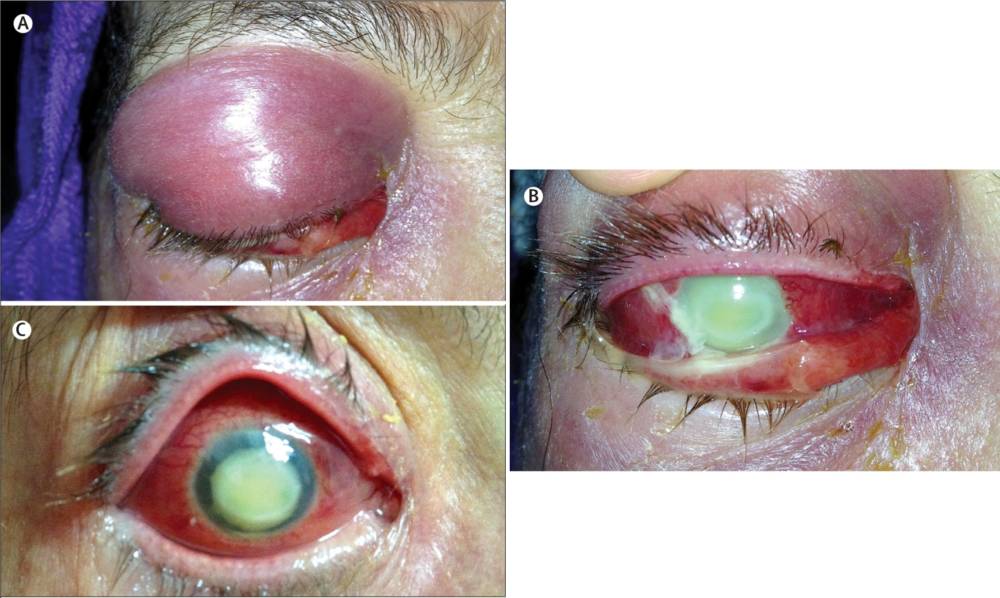
Biomicroscopic examination showed eyelid edema, conjunctival injection, total chemosis, abundant purulent secretions, and a greenish hypopyon occupying the anterior chamber, typical of pseudomonas infection. CT showed preseptal and retroseptal cellulitis, exophthalmos grade II, and a dislocated cataractous lens in the lower vitreous.
Vitreous and aqueous humour samples were taken and the patient was given one injection of intravitreal antibiotics (vancomycin 1 mg/0,1 mL and ceftazidime 2,25 mg/0,1 mL). She was started on systemic antibiotics (intravenous ceftriaxone 1 g twice daily and levofloxacin 500 mg twice daily) and a systemic hypotonic (oral acetazolamide 250 mg twice daily). 48 hours later she was given a second dose of intravitreal antibiotics and started methylprednisolone 40 mg twice daily for 5 days to reduce the inflammation.
Vitreous cultures grew Pseudomonas aeruginosa. By the seventh day the patient’s pain, eyelid edema, and proptosis had resolved, but she had a persistent vitreous opacity.
Pars plana vitrectomy and iris-claw intraocular lens were done on the posterior side of the iris to compensate for the refractive disorder caused by absence of the crystalline lens. At the last follow-up, her best corrected visual acuity was 6/60 in the right eye and intraocular pressure had returned to normal (16 mm Hg).